Power for Every Ride


YESPER In-House Manufacturing


Years History
Global Factories
Global Patents
Countries Covered
Established in 2011, YESPER is a vertically integrated manufacturer of lithium battery applications, combining in-house R&D, advanced production facilities, and global distribution.
With its own production facilities and a strong engineering team, YESPER maintains full control over quality, innovation, and supply — delivering reliable power solutions at scale.
Our products meet international standards, with certifications including ISO9001, IATF16949, BSCI, UL, CE, FCC, and more — ensuring performance you can trust in every situation.
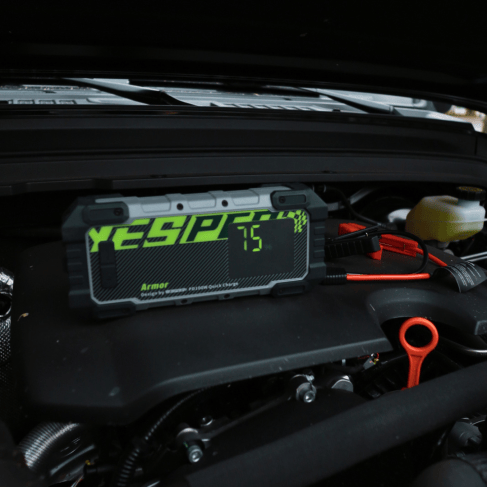
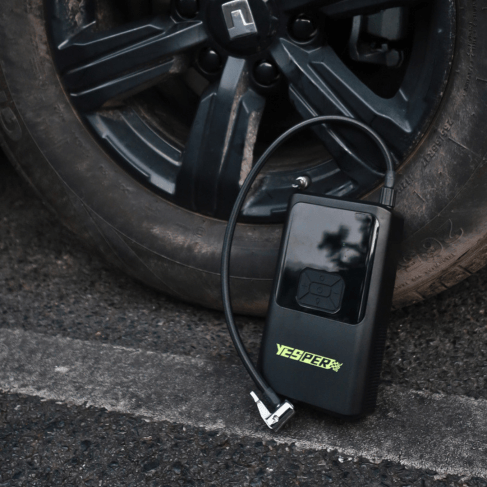
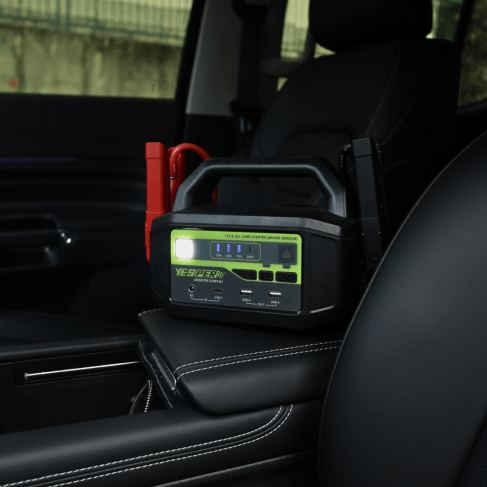
Driven by continuous innovation, YESPER is expanding its “Battery+” ecosystem, from car jump starters and automotive batteries to portable power stations and smart energy devices — powering mobility, outdoor lifestyles, and everyday life.
Sodium-ion battery systems engineered for commercial transport and marine use
What's Sodium-ion?
Why Sodium-ion?
Core Materials
Battery Comparison
What's Sodium-ion?
A sodium-ion battery is a rechargeable battery that uses sodium ions (Na⁺) as charge carriers. It works in a similar way to lithium-ion batteries, storing and releasing energy through the movement of sodium ions between the cathode and anode. Thanks to the abundant availability of sodium, sodium-ion batteries are seen as a promising alternative for cost-sensitive and safety-focused applications.
Why Sodium-ion?
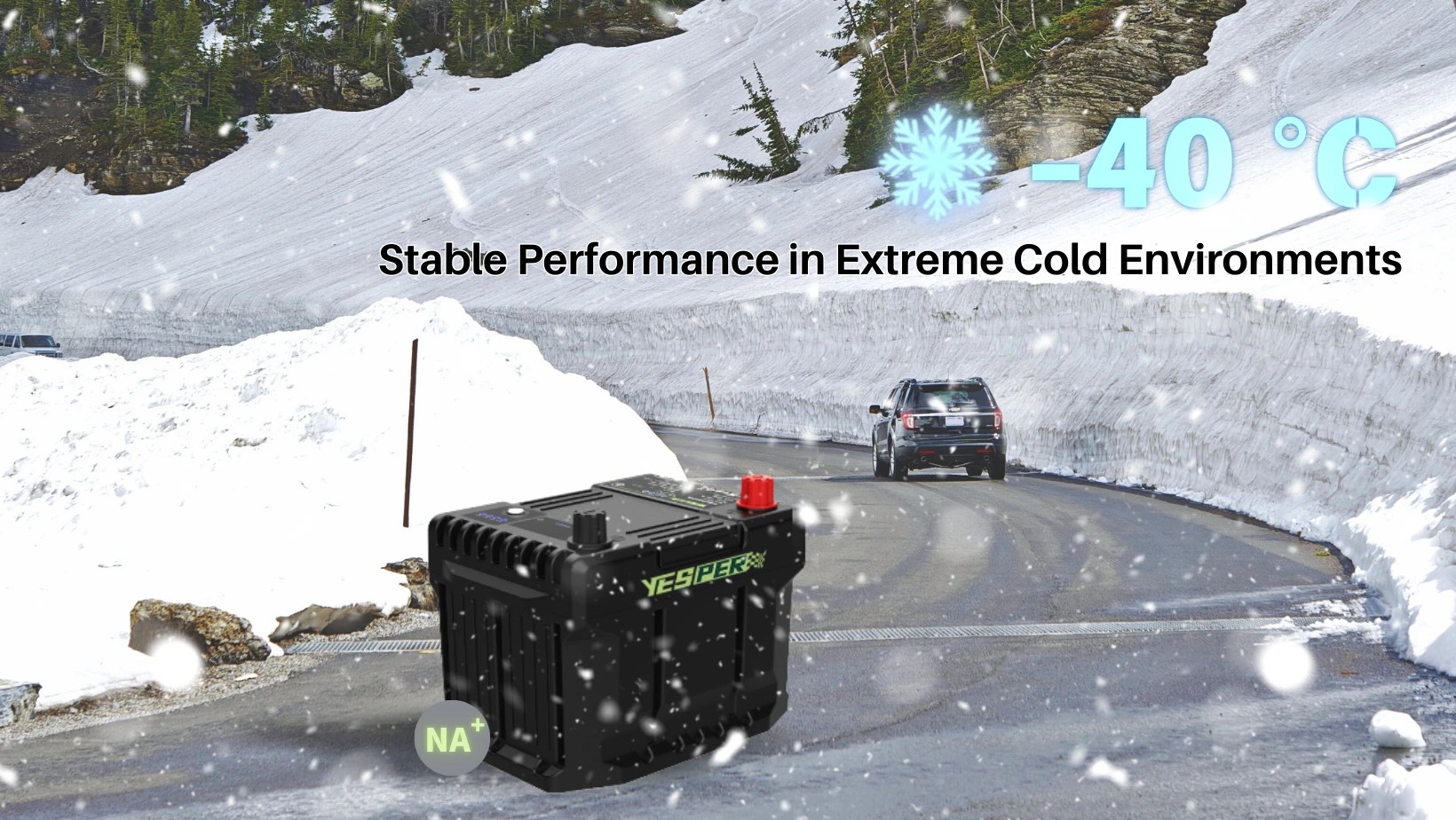
Sodium-ion batteries offer low cost, high safety, strong low-temperature performance, and enhanced environmental friendliness. Sodium is abundant and easier to source with lower environmental impact, reducing dependence on scarce or high-impact materials such as lithium and cobalt. With high thermal stability and low risk of thermal runaway, sodium-ion batteries maintain stable performance in cold conditions, making them well suited for commercial vehicles, heavy-duty trucks, RVs, marine vessels, motorcycles, as well as energy storage and backup power applications.
The core materials of sodium-ion batteries include cathode materials, anode materials, electrolyte, and separator. Common cathodes are layered oxides and polyanionic compounds, while hard carbon is widely used as the anode. Sodium-based electrolytes are typically applied. This material system avoids reliance on scarce elements like lithium and cobalt, ensuring stable supply and sustainability.
Compared with lithium-ion batteries, sodium-ion batteries have advantages in cost, safety, and low-temperature performance, but their energy density is relatively lower, resulting in slightly larger size and weight. Lithium-ion batteries remain superior in energy density and technological maturity. Overall, sodium-ion batteries serve as a complementary solution, offering unique value in specific applications.

Lead-acid Battery
- Safety: High
- Service life: 8× instantaneous discharge, 2000 cycles, ~3-year service life
- Cycle life: 300–500 cycles
- Low-temperature capacity: 60% discharge at -20°C, no discharge at 40°C
- Low-temperature cranking: No cranking at -40°C
- Overcharge resistance: Ordinary
- Deep discharge resistance: Prone to failure, full discharge strictly prohibited
- Fast charging: Not supported
- Monthly self-discharge rate: ~5%/month, requires recharging every 3 months

Sodium Battery
- 🛡️ Safety: High
- 🔁 Service life: 20× instantaneous discharge, 100,000 cycles, 10+ years service life
- 🔄 Cycle life: ≥3000 cycles
- 🌡️ Low-temperature capacity: 92% discharge at -20°C, 87% at 40°C
- ❄️ Low-temperature cranking: Normal cranking at -40°C
- ⚠️ Overcharge resistance: Withstands 6× standard voltage overcharge
- 🚫 Deep discharge resistance: Can discharge to 0V, long-term storage even at 0V
- ⚡ Fast charging: Supports 6× charge/discharge rate
- 📉 Monthly self-discharge rate: ≤2%/month, storage up to 1 year without recharging

Lithium Battery
- 🛡️ Safety: High
- 🔁 Service life: 20× instantaneous discharge, 50,000 cycles, 5+ years service life
- 🔄 Cycle life: ≥3000 cycles
- 🌡️ Low-temperature capacity: 60% discharge at -20°C, no discharge at 40°C
- ❄️ Low-temperature cranking: No cranking at -40°C
- ⚠️ Overcharge resistance: Withstands 2× standard voltage overcharge
- 🚫 Deep discharge resistance: Prone to deep discharge failure; continued use may cause safety hazards
- ⚡ Fast charging: Supports 2–4× charging
- 📉 Monthly self-discharge rate: ≤2%/month, storage up to 1 year without recharging
read our latest inside stories
Become A YESPER PARTNER